
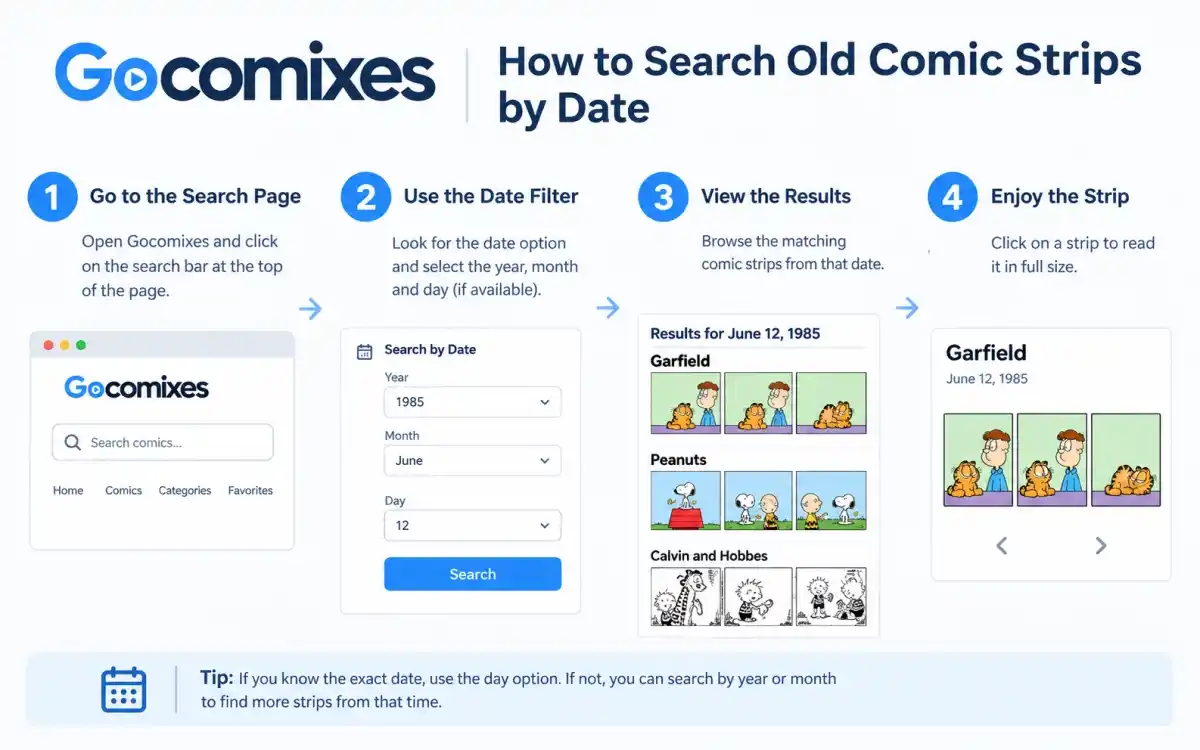

To learn how to search old comic strips by date, you can use the built-in calendar menu tool on digital syndication sites or check through organized microform folders inside major university libraries. Pulling up a specific print page from decades ago simply requires matching the original publication weekday with a verified syndication database.
Finding a missing panel from your childhood isn’t as hard as it sounds. Here is a quick summary of the best options depending on the era you are trying to track down:
+-----------------------------------+--------------------+------------------------+

| Target Comic Era                  | Best Tool to Use   | Expected Archive Depth |
+-----------------------------------+--------------------+------------------------+

| Modern Webcomics (2000s–Present)  | On-site Dashboards | Full digital accuracy  |
| Golden Age Strips (1950s–1990s)   | Syndicate Engines  | Extensive daily logs   |
| Vintage News Prints (1890s–1940s) | Library Databases  | Microfilm scans        |
+-----------------------------------+--------------------+------------------------+
The Best Digital Vaults for Tracking Vintage Panels
Most comic enthusiasts start their hunt in the wrong place. They drop a vague quote into a standard search engine box and hope a random fan blog saved the exact image they want.
That strategy rarely works out well. Instead, you need to head straight to the source databases where original newspaper layout proofs are preserved.
Major media syndicates maintain enormous digital servers that house millions of individual daily grids. Platforms like GoComics host comprehensive, high-resolution file arrays that trace popular creations like Garfield or Peanuts right back to their initial mid-century launch windows.
If you are looking for independent or diary-style comics outside the mainstream newspaper networks, specialized newsletter platforms and indie databases like Substack’s Drawing Links often showcase independent creator logs sorted neatly by month and year.
How to Find Classic Comic Strips by Exact Date: A Step-by-Step Guide
Let’s walk through the manual process of pinpointing a precise strip using the modern calendar alignment method on a legacy platform.
- Locate the master directory page of your chosen cartoon feature on the syndicate portal.
- Find the media player panel positioned directly above or below the current day’s featured illustration.
- Click on the calendar drop-down icon to pull up the numerical date picker dashboard grid.
- Change the year selection variable first to drop the system straight back to your target decade.
- Select the target month and day from the aligned monthly display boxes.
- Hit the execute button to refresh the viewer with the official high-resolution historical backup layout.
For instance, if you want to find the iconic moment when Charlie Brown first attempts to kick Lucy’s football, you would configure your menu drop-downs to show November 14, 1951. The system skips past thousands of unrelated days and pulls up the exact four-panel layout proof from that specific Wednesday print run.
Alternative Research Methods When Standard Sites Fail
What happens when the comic you want was printed in a small, local newspaper that went out of business thirty years ago? Syndicate engines don’t always track regional or short-lived independent work.
When you hit a brick wall on the main commercial websites, it is time to move your investigation over to historical public frameworks. The U.S. National Archives and the Library of Congress run massive digitization programs that let you look through complete, unedited scans of historical city papers.
Many public universities receive large donations of personal print clippings and historical scrapbooks from private collectors. These physical media collections are systematically digitized to expand public access to vintage illustrations.
You can use their advanced search tools to filter local newspaper runs by the exact publication year. This method lets you view the actual page exactly as a reader would have seen it over breakfast fifty years ago.
Common Mistakes Readers Make When Digging Through Comic Archives
The single biggest mistake fans commit when learning how to search old comic strips by date is completely forgetting about Sunday formatting shifts. For nearly a century, cartoonists drew entirely different layouts for their weekend features compared to their standard Monday-through-Saturday black-and-white grids.
Sunday strips required extra processing time for the large color printing presses, meaning they carried independent catalog numbers in the syndication ledgers. If you run a search using a Saturday date for an event that actually ran in the expanded Sunday color section, the system will show you an entirely different storyline sequence.
Another frequent oversight is ignoring time zones. Many online networks push their automated midnight updates based on Pacific Standard Time or Eastern Standard Time variables. If you are browsing from a international location, the “current strip” box might show a different publication date than what you expect based on your local clock.
6. FAQ Section
Why do some classic comic strips show a generic placeholders instead of an illustration on certain dates?This issue occurs when the original physical newspaper proof plates were lost or suffered severe water damage before the digitization process began. When an archival team cannot find a clean physical copy to scan, they insert a placeholder notice to maintain the chronological timeline order.
Can I view old newspaper comic strips by date for free?
Yes, public digital registries like Chronicling America allow you to browse thousands of early twentieth-century newspapers at no cost. However, commercial syndication networks usually restrict their deep historical archives behind a paid monthly membership portal once you look past the trailing 30 days of content.
Yes, public digital registries like Chronicling America allow you to browse thousands of early twentieth-century newspapers at no cost. However, commercial syndication networks usually restrict their deep historical archives behind a paid monthly membership portal once you look past the trailing 30 days of content.
How do I find a comic strip if I only remember a funny line but not the date?
You can use specialized text-index search tools like the transcripts feature on fan-run databases. Dedicated archivers manually type out every single spoken line inside the panels, allowing you to search for key phrases to discover the exact publication date you need.
You can use specialized text-index search tools like the transcripts feature on fan-run databases. Dedicated archivers manually type out every single spoken line inside the panels, allowing you to search for key phrases to discover the exact publication date you need.
Are the daily dates on the platform the same dates the comic was drawn?
No, syndicated artists typically operate on a strict production delay window, often drawing and submitting their panel sheets six to eight weeks before the target newspaper publication date. The search tools are configured to match the date the public actually saw the strip in print, not the day the artist inked the paper.
No, syndicated artists typically operate on a strict production delay window, often drawing and submitting their panel sheets six to eight weeks before the target newspaper publication date. The search tools are configured to match the date the public actually saw the strip in print, not the day the artist inked the paper.
7. Conclusion
The most useful takeaway when trying to track down a specific vintage panel is to adjust your year parameters first inside a verified syndicate calendar setup rather than running loose phrase queries on a standard web engine. Approaching your search with a clear target date and an understanding of the difference between daily and Sunday layouts will save you hours of useless scrolling.